From Heatwave to Megafire

From Heatwave to Megafire: The Chain Reaction Behind the 2026 Wildfire Crisis

In 2026, wildfires across Europe and the United States have shown how quickly extreme weather can transform a dry landscape into a dangerous source of fuel. From France and Spain to parts of Italy, the Balkans, and the western United States, firefighters have faced fires that spread rapidly, threatened communities, destroyed homes, and forced large-scale evacuations. In France and Spain alone, the European Union deployed firefighting aircraft, helicopters, vehicles, and personnel as hundreds of thousands of people were displaced by major fires.

But a megafire does not begin with a single moment of extreme flames. It usually begins much earlier, when weather and landscape conditions gradually create the right environment for a fire to grow. A period of heat dries vegetation. Drought removes moisture from soil and plants. Earlier rainfall can encourage unusually dense vegetation, creating more fuel. Human activity or lightning provides the spark, while wind can push the flames across large areas. In the most extreme cases, the fire becomes so powerful that it begins to influence the atmosphere around it, creating its own winds and dangerous fire-generated weather.

This is the chain reaction behind some of the world’s most destructive wildfires.

Climate change is an important part of this story because rising temperatures can make heatwaves more intense and increase the drying of vegetation, but climate is not the only explanation. Land management, vegetation growth, drought, wind, human settlement, and the availability of firefighting resources all influence what happens after a fire starts.

The lesson from the 2026 fire season is therefore more complicated than simply saying that the world is getting hotter. Heat prepares the landscape, but the landscape, the weather, and the ignition determine how far the fire can go.

What Turns a Wildfire Into a Megafire?

Megafires are more than large fires

There is no single worldwide definition of a megafire, and scientists and fire agencies may use different measures when describing exceptionally large fires. Size matters, but it is not the only factor that makes a fire extreme.

A megafire is better understood as a fire that becomes exceptionally difficult to control because several dangerous characteristics occur at the same time. It may spread rapidly across a large area, develop several active fronts, send burning embers far ahead of the main flames, produce enormous amounts of heat, and behave in ways that make its movement difficult to predict.

The most dangerous fires can also create their own weather. Powerful columns of hot air rise above the flames, carrying smoke and moisture high into the atmosphere. Under the right conditions, these clouds can develop into towering structures known as pyrocumulonimbus clouds. The intense movement of air around the fire can then create strong and unpredictable winds, making the fire even more aggressive.

This creates a feedback loop. The fire produces heat, the heat changes the atmosphere, the changing atmosphere affects the wind, and the wind pushes the fire into new fuel.

Research on Mediterranean Europe shows just how important this combination can be. Studies of extreme fires have found that the largest events are strongly connected with severe fire-weather conditions and continuous fuel loads, while recent research has also found a growing connection between heatwave conditions and very large fires.

Why megafires are becoming harder to control

Firefighters are not simply fighting flames. They are fighting a moving system affected by temperature, humidity, wind, terrain, vegetation, smoke, and human development.

Hotter conditions can dry vegetation more quickly. Drier vegetation burns more easily and releases more energy once ignited. Strong winds can then carry flames and embers into areas that firefighters have not yet secured.

At the same time, more people live close to forests, grasslands, shrublands, and other fire-prone landscapes. This means that a fire that might once have remained mostly a forest emergency can quickly become a threat to homes, roads, power lines, hospitals, and other infrastructure.

Another problem appears when several major fires happen at once. Fire agencies have limited numbers of firefighters, aircraft, engines, and commanders. When multiple regions experience extreme fire weather simultaneously, it becomes harder to send enough resources to every fire.

The 2026 fires in Europe demonstrated this problem clearly. The European Union had to mobilize resources from several countries to support France and Spain, including aircraft and ground personnel, while its Copernicus satellite service provided emergency mapping.

The First Stage: Heatwaves Dry the Landscape

Extreme heat removes moisture
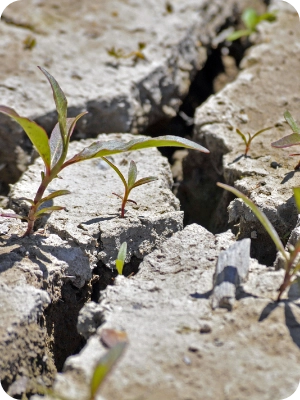
The Connection Between Soil Moisture and Fire Risk - Wildfire Crisis

The first stage of the chain reaction often happens before anyone sees smoke.

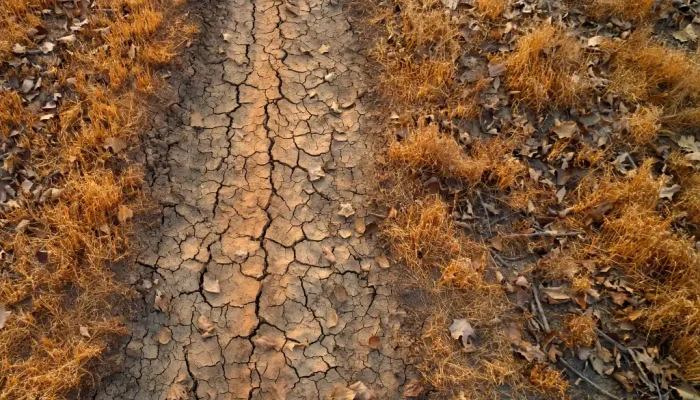
During a heatwave, temperatures rise far above normal levels for several days or longer. The atmosphere becomes capable of drawing more water from the land, while plants lose moisture through a process called evapotranspiration. Soil also dries as water evaporates.

This matters because living vegetation is not equally flammable at all times. A green plant containing plenty of water is much harder to burn than dry grass, leaves, branches, and shrubs.

As the landscape dries, the amount of energy required to ignite vegetation falls, and once a fire begins, the dry material can burn more rapidly.

It is important, however, to make one distinction clear: extreme heat does not normally ignite a wildfire by itself. A heatwave usually prepares the landscape rather than providing the spark. The actual ignition may come from lightning, machinery, electrical equipment, vehicles, agricultural activity, campfires, or deliberate burning.

This distinction is important because it explains why the same heatwave can produce very different results in different places. If there is little dry fuel or no ignition, a heatwave does not automatically create a megafire. But when extreme heat arrives in a landscape already loaded with dry vegetation, the risk can increase dramatically.

The relationship between precipitation and wildfire risk is also more complicated than simply saying that rain prevents fires. Periods of heavy rainfall can increase vegetation growth, while later heat and drought can turn that additional vegetation into fuel. For a deeper look at this relationship, see our previous article, How Atmospheric Rivers Influence Wildfire Seasons, which examines how atmospheric rivers and unusually wet periods can influence vegetation, drought conditions, and later wildfire activity.

Drought creates longer-lasting fire danger

A short heatwave can dry vegetation quickly, but drought can create a much deeper problem.

When an area receives less precipitation than normal for a prolonged period, water stored in soil, rivers, reservoirs, wetlands, and plants begins to decline. Trees and shrubs can become stressed, grasslands can dry out, and agricultural areas can lose moisture.

Drought also matters because it can last beyond the heatwave that first attracts attention. A landscape may remain dangerously dry even after temperatures temporarily return to normal.

The combination of hot, dry, and windy weather with dry vegetation is a well-established driver of large wildfire risk. Drought conditions can also place pressure on water supplies, agriculture, ecosystems, and the resources available for firefighting.

In this way, drought acts like a background condition. It may not create a fire by itself, but it can leave the landscape ready for one.

The Fuel Buildup: When Vegetation Becomes a Fire Hazard

The “weather whiplash” effect

One of the most important parts of the wildfire story is that a wet period can sometimes help create the fuel for a later fire.

Imagine a landscape that receives an unusually wet winter and spring. Grass grows quickly. Shrubs become denser. Plants spread across open ground, and forest understory becomes thicker.

At first, this looks like a positive development. The landscape is green, productive, and full of vegetation.

Then the weather changes.

A long period of extreme heat arrives. Rainfall decreases. Humidity falls, and the soil loses moisture. The vegetation that grew during the wet period begins to dry.

The landscape has now changed from a relatively low-fuel environment into one containing a large amount of continuous, dry material.

This is sometimes described as a form of weather whiplash because the landscape moves quickly from unusually wet conditions to unusually hot and dry conditions.

The result is important for wildfire behavior. A fire needs fuel, and dense vegetation provides more material for flames to consume. When that fuel is continuous rather than separated by fields, roads, rivers, or other breaks, fire can travel more easily across the landscape.

Land management and rural depopulation

The amount and arrangement of vegetation are also shaped by human decisions.

Across parts of southern Europe, rural populations have declined over decades as agriculture and traditional land uses have changed. In some areas, farmland that was once regularly cultivated or grazed has become increasingly overgrown.

Grazing animals can remove grasses and shrubs. Farming can create patches of land with different types of vegetation. Small fields, paths, orchards, and managed areas can interrupt the continuity of fuel.

When those activities disappear, vegetation can become more connected.

The type of vegetation matters as well as the amount of it. Different tree species contain different levels of moisture, oils, resins, and other compounds, and their leaves, bark, branches, and litter can behave differently when exposed to fire. Our previous article, How Different Tree Species Affect Fire Intensity, looks more closely at how tree characteristics can influence the intensity and behavior of wildfire.

That does not mean abandoned land automatically causes destructive fires, nor does it mean traditional land management is always better for every ecosystem. The important point is that landscape structure and vegetation type affect fire behavior.

A fire moving through separated patches of vegetation may lose intensity when it reaches a field or another low-fuel area. A fire moving through continuous dry grass, shrubs, and forest fuel has fewer natural interruptions.

This is why climate change should not be treated as the only factor behind megafires. Climate can make the weather more dangerous, but land management, vegetation type, and landscape structure can determine how much fuel is available when that dangerous weather arrives.

The Spark: How Wildfires Begin

Human-caused ignitions
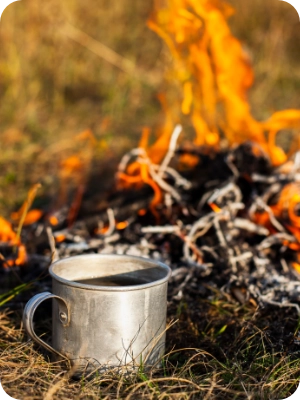
A new study reveals that human activity is responsible for 84% of wildfires, igniting nearly five out of every six fires and extending the fire season by months.

After heat, drought, and fuel buildup have prepared the landscape, the next step is ignition.

In many populated areas, people are an important source of wildfire ignitions. Agricultural and forestry equipment can generate sparks or heat. Vehicles can ignite dry vegetation along roadsides. Electrical infrastructure can become a source of ignition under certain conditions. Construction, campfires, cigarettes, fireworks, and deliberate fires can also start wildfires.

The exact balance between human and natural ignitions varies greatly from one region to another, so it is dangerous to assume that every major fire has the same cause.

In the United States, however, human activity is responsible for a large share of wildfire ignitions. The reasons range from accidental fires to equipment failures and deliberate burning, making prevention and public awareness an important part of reducing wildfire risk. For a more detailed examination of this issue, see our previous article, Why Human-Caused Wildfires Dominate the US: Causes, Risks, and Prevention.

The key point is that an ignition does not have to be large to become dangerous. A small flame in the right conditions can spread rapidly if the surrounding fuel is dry and continuous and the wind is strong.

This is why fire-prevention rules become especially important during heatwaves. Activities that might be relatively low-risk during a cool and wet period can become much more dangerous when vegetation is extremely dry.

Natural ignitions

Lightning is one of the most important natural sources of wildfire ignition, particularly in parts of North America and other regions where thunderstorms occur over dry landscapes.

A dry thunderstorm can be especially dangerous because it can produce lightning without delivering enough rain to significantly wet the ground. A single storm can therefore create multiple ignition points across a large area.

Natural ignition also illustrates why weather and fuel conditions matter so much. Lightning is not automatically a disaster. If it strikes wet vegetation after substantial rainfall, the resulting fire may go out quickly. If it strikes dry grass during a hot, windy period, the outcome can be very different.

The same principle applies to human ignition: the spark matters, but the landscape determines how much opportunity that spark has to grow.

Europe’s 2026 Wildfire Crisis

Mediterranean Europe under pressure

Mediterranean Europe is particularly vulnerable to wildfire because it naturally experiences hot and dry summers, and many landscapes contain vegetation that can become highly flammable during prolonged drought.

Spain, Portugal, southern France, Italy, Greece, and the Balkans all face different combinations of heat, drought, wind, terrain, vegetation, and human settlement.

Research into extreme wildfires in Mediterranean Europe has found particularly high historical risks in countries including Portugal, Greece, Spain, and Italy.

The 2026 season has provided a dramatic real-world example of these risks. France and Spain experienced major fires during a period of exceptional heat, while other European countries also faced serious fire activity. By late July, the European Union was deploying international firefighting resources to both France and Spain, including aircraft, helicopters, vehicles, and personnel.

France was particularly affected. Reporting in late July indicated that more than 91,000 hectares had already burned in France, exceeding the country’s previous full-season record of just over 66,000 hectares.

The scale of the evacuations also demonstrated that modern wildfire disasters are not limited to remote forests. In France and Spain, more than 300,000 people were displaced during the July crisis.

Why European fires threaten populated areas

The Mediterranean region has another major vulnerability: people live close to fire-prone landscapes.

Villages, tourist resorts, farms, roads, power infrastructure, and homes can sit directly beside forests and shrublands. This creates what firefighters sometimes describe as a wildland-urban interface, where natural vegetation and human development meet.

When a fire moves quickly through such an area, the challenge is no longer simply to stop the flames. Authorities must protect people, keep evacuation routes open, manage traffic, maintain communications, and prevent smoke from overwhelming communities.

The speed of an extreme fire can leave residents with little time to react.

This was visible in France in 2026, where a major wildfire led to one of Europe’s largest evacuation operations in decades. Reports indicated that roughly 220,000 people were evacuated during the crisis in southwestern France.

The problem is therefore both environmental and social. A fire can destroy vegetation, but it can also disrupt schools, businesses, transportation, electricity, tourism, agriculture, and housing.

When the Fire Creates Its Own Weather

How extreme fires intensify themselves

One of the most frightening characteristics of an extreme wildfire is that the fire can begin to influence the weather around it.

A powerful fire heats the air above the flames. Hot air rises rapidly, pulling surrounding air toward the fire. As smoke, heat, and moisture rise, a huge cloud can develop above the fire.

In the most extreme cases, this process can produce a pyrocumulonimbus, or fire-generated thunderstorm.

The rising air can create powerful winds, while changes in atmospheric pressure and turbulence can make the fire’s behavior difficult to predict.

At ground level, this can create a dangerous cycle. Strong winds push flames into fresh vegetation. Burning embers can be carried far ahead of the main fire. Those embers can land on roofs, vegetation, or other combustible materials and create new spot fires.

The result is a fire that can appear to jump over roads, firebreaks, and other barriers.

Why this changes firefighting

Firefighters depend on forecasts and models to estimate where a fire is likely to move. But when the fire begins generating its own weather, those predictions become more difficult.

Wind direction can change quickly. Flame intensity can increase suddenly. Turbulence can create dangerous conditions for aircraft. Smoke can reduce visibility, while new spot fires can appear in areas that were previously considered safe.

This is one reason extreme fires can become dangerous even when large numbers of firefighters are present.

The problem is not simply a lack of people. It is that the fire itself can change the conditions under which firefighters are operating.

The Ecological Chain Reaction

Immediate ecosystem damage

The ecological effects of a megafire begin as soon as the flames pass through the landscape.

Animals may be killed directly or forced to flee. Birds can lose nesting areas, while mammals and insects can lose feeding and shelter habitats. Vegetation is burned, exposing soil to heat, wind, and rainfall.

Not every fire produces the same ecological outcome. Some ecosystems have evolved with regular, low-intensity fire and can recover relatively quickly. Other ecosystems are much more vulnerable to severe or repeated burning.

The intensity of the fire matters enormously.

A low-intensity fire may clear some vegetation while leaving mature trees and underground systems alive. An extremely hot fire can destroy vegetation, damage soil organisms, reduce seed banks, and make natural recovery much more difficult.

Repeated fires can create another problem. If an area burns again before vegetation has fully recovered, the ecosystem may shift toward a different type of landscape.

Researchers studying southern Europe have found that repeated burning is an important part of the region’s disturbance patterns, showing that wildfire impacts cannot always be understood by looking at individual fires in isolation.

After vegetation disappears, heavy rain can also wash ash and exposed soil into rivers and streams. This can affect water quality and aquatic ecosystems, while erosion can continue long after the flames are gone.

The fire, in other words, does not necessarily end when the smoke disappears.

Smoke, Health, and Social Consequences

The physical flames are only one part of a wildfire disaster.

Smoke can travel hundreds or even thousands of kilometers, depending on atmospheric conditions. Fine particles in wildfire smoke can enter the lungs and contribute to serious health problems, particularly for people with existing respiratory or cardiovascular vulnerabilities.

This means a wildfire does not need to burn directly outside a city to affect the people who live there.

Smoke can close schools, disrupt outdoor work, reduce visibility on roads, affect aviation, and force people to remain indoors. During severe events, entire communities can experience days or weeks of poor air quality.

The health consequences of wildfire smoke are also much larger than the immediate effects that are easiest to see. Smoke exposure can contribute to premature deaths and worsen existing health problems, creating a hidden burden that can continue even after the flames have been extinguished. Our previous article, The Hidden Killer: Wildfire Smoke’s Increasing Death, explores this less visible side of wildfire disasters and the growing health burden associated with smoke exposure in the United States.

The economic consequences can also spread far beyond the burn area.

A tourist region affected by smoke may lose visitors. Farmers may lose crops or livestock. Businesses may close temporarily. Roads and railways can be interrupted. Electricity infrastructure can be damaged. Emergency services may have to redirect resources away from other needs.

There is also a psychological cost.

People who evacuate may spend days uncertain about whether their homes still exist. Those who return may find damaged buildings, destroyed possessions, or landscapes that look completely different from the places they knew.

This is why wildfire should be viewed as more than a natural hazard. A megafire can become a public-health crisis, an economic crisis, an infrastructure crisis, and a humanitarian crisis at the same time.

Can Wildfire Prevention Break the Chain?

Managing vegetation and fuels

If megafires develop through a chain reaction, prevention does not have to focus on only one link.

One approach is to manage the amount and arrangement of vegetation before extreme weather arrives. Prescribed burning, mechanical thinning, controlled grazing, removal of dead vegetation, and strategically designed fuel breaks can reduce fuel in selected areas.

The goal is not to remove every plant or prevent every fire. In many ecosystems, fire is a natural ecological process.

Instead, the goal is to reduce the chances that a small fire becomes an uncontrollable one under extreme weather.

Maintaining agricultural mosaics can also help create areas with different levels of vegetation and fuel. Restoring wetlands and other naturally moist landscapes can provide additional areas that are less likely to burn intensely.

These measures are especially important because fuel management can be carried out before a heatwave arrives. Once a major fire is moving through a landscape under extreme wind and heat, options become much more limited.

Protecting homes and communities

Communities can also break the chain by making buildings more resistant to wildfire.

A home surrounded by dry grass and shrubs has a different level of risk from one surrounded by well-maintained defensible space. Roofs, vents, gutters, fences, windows, and landscaping can all influence whether embers are able to ignite a building.

Embers are particularly dangerous because they can travel ahead of the main fire front. A community may therefore be threatened even when flames are still some distance away.

Preparing evacuation routes is equally important.

Residents need clear information about when to leave and where to go, while authorities need communication systems capable of reaching people quickly. Roads must be planned with the possibility of congestion, smoke, blocked routes, and rapidly changing fire conditions in mind.

Improving early warning and cooperation
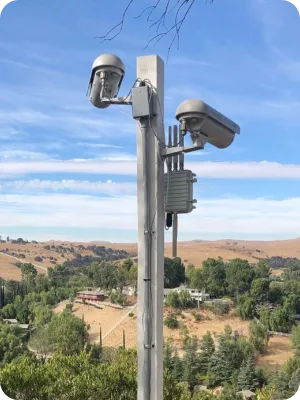
Fire and Smoke Detection Cameras using AI

Modern technology is giving firefighters more tools to detect and understand fires.

Satellites can identify active fires and monitor burned areas. Weather models can estimate dangerous combinations of heat, humidity, wind, and dryness. Drones and remote sensors can provide information from areas that are too dangerous for people to enter.

Early warning systems can then turn this information into decisions.

The European response to the 2026 fires showed the value of international cooperation. Aircraft and firefighters from several countries were deployed to help France and Spain, while Copernicus satellite mapping supported emergency operations.

This kind of cooperation is increasingly important because extreme fire seasons can affect several countries at once.

The United States faces a similar challenge at a different scale, with states and federal agencies often having to coordinate resources across large regions when multiple major fires are burning simultaneously.

No single fire department can maintain enough resources to handle every possible extreme event alone. Cooperation therefore becomes part of resilience.

What the 2026 Fire Season Reveals

The 2026 wildfire crisis shows that a megafire is rarely the result of one simple cause.

First, extreme heat prepares the fuel, but ignition still matters. A heatwave can dry vegetation and create dangerous fire-weather conditions, but a fire still needs a source of ignition. That source may be human or natural, and preventing avoidable ignitions remains one of the most direct ways to reduce wildfire risk.

Second, climate conditions and land management interact. A warmer climate can increase the likelihood of extreme heat and drying, but the amount of fuel on the ground and the way landscapes are managed can determine how a fire behaves once it starts. Climate adaptation and local land management therefore have to work together.

Third, wildfires are becoming a landscape-management challenge, not only an emergency-service problem. Firefighters are essential, but they cannot solve every part of the problem after the flames have already become extreme. Communities must prepare buildings and evacuation routes, land managers must consider fuel conditions, governments must improve early warning systems, and countries must cooperate when disasters cross borders.

The chain reaction can begin months before a fire appears.

Rain can encourage vegetation growth. Heat can remove moisture. Drought can weaken the landscape. Wind can increase the danger. A spark can begin the fire. Then, under extreme conditions, the fire can generate its own winds and spread beyond the ability of ordinary firefighting methods to contain it.

That is why the most effective wildfire strategy begins long before the first emergency call.

The lesson of the 2026 wildfire crisis is not that every fire can be prevented. Fire is a natural part of many ecosystems, and some wildfires will always occur. The more realistic goal is to interrupt the chain reaction that turns an ignition into a megafire.

Better land management can reduce fuel. Safer buildings can resist embers. Early warnings can give communities more time to evacuate. International cooperation can move aircraft and firefighters to where they are needed most. And reducing greenhouse-gas emissions can help limit the long-term increase in extreme heat that is making fire weather more dangerous.

A wildfire may begin with a single spark, but the conditions that allow it to become a megafire are built from many connected factors.

Understanding those connections is the first step toward breaking them.

Picture of SmokeD

SmokeD

Our mission is to increase the level of safety of people and animals living in high-risk areas, which are particularly exposed to fires. By implementing our system, we protect you, your facilities, and the nature that surrounds us. We are happy to cooperate on projects that have a huge positive impact on our planet.

Share post on: