
What Happens to Soil During a Wildfire?
Heat Shock Beneath the Surface
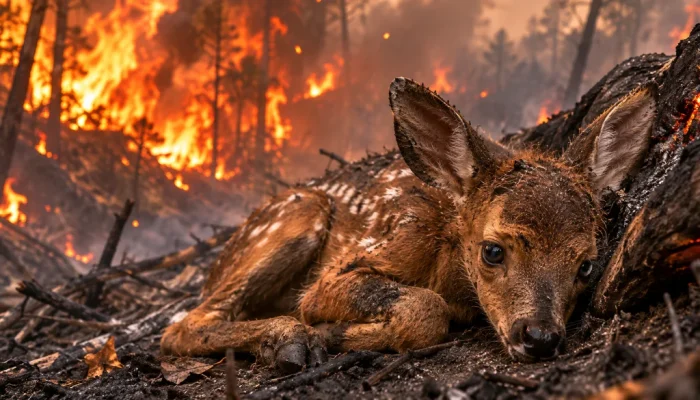
A wildfire may appear to burn only what is visible above ground, but the heat generated by the flames can penetrate deep into the soil. The extent of this heating depends on factors such as fire intensity, fuel availability, soil moisture, and weather conditions. During severe wildfires, temperatures at the surface can exceed several hundred degrees Celsius, creating dramatic changes in the upper layers of soil.
The first major effect is the loss of organic matter. Organic matter consists of decomposed plant material, roots, microorganisms, and other biological substances that help maintain soil fertility. As temperatures rise, much of this material begins to burn or decompose rapidly. The destruction of organic matter removes an important source of nutrients and weakens the soil’s ability to support future plant growth.
Heat can also damage plant roots buried beneath the surface. Even when trees survive a fire, their root systems may suffer significant injury, reducing their ability to absorb water and nutrients. In severe cases, entire root networks can be destroyed, leaving the soil vulnerable to erosion and instability.
The depth of heat penetration varies greatly. A low-intensity fire may affect only the top few centimeters of soil, while a high-intensity wildfire can alter conditions much deeper underground. This difference plays a major role in determining how quickly an ecosystem recovers.
Chemical Reactions Triggered by Fire
Wildfires set off a cascade of chemical reactions that reshape soil composition for years. When vegetation and organic matter burn, the elements stored within plant tissues are released back into the environment. Some nutrients settle into the soil as ash, while others escape into the atmosphere as gases, altering both local soil chemistry and broader atmospheric conditions.
One of the most significant losses is nitrogen. Because nitrogen volatilizes at relatively low temperatures, even moderate‑intensity fires can dramatically reduce the amount available for future plant growth. Carbon is also released in large quantities as carbon dioxide and other combustion gases, contributing to greenhouse gas accumulation while simultaneously depleting the soil’s organic carbon reserves.
Not all nutrients are lost, however. Fire often leaves behind ash enriched with calcium, potassium, phosphorus, and magnesium, creating a short‑lived pulse of fertility in the upper soil layers. This nutrient boost can accelerate early vegetation recovery—especially in ecosystems adapted to periodic burning.
Another key product of wildfire chemistry is charcoal, or pyrogenic carbon. Unlike ash, charcoal is highly resistant to decomposition and can persist in soils for decades or even centuries. Scientists study charcoal deposits to reconstruct historical fire patterns and to understand how long‑term soil processes respond to repeated burning.
These chemical transformations are closely tied to the fire behavior factors that determine how hot and how fast a wildfire burns. For readers interested in the fundamentals of fire dynamics, our article Fire Trigonometry: Knowledge Hidden in Triangles explains how the fire triangle and fire behavior triangle shape wildfire intensity—and ultimately influence the soil chemistry outcomes described here.
Soil Structure Breakdown

The physical structure of soil is just as important as its chemical composition. Healthy soil contains aggregates, which are clusters of particles held together by organic matter and microbial activity. These aggregates create spaces that allow air and water to move through the ground.
Wildfires can damage or destroy these structures. As organic binding materials burn away, soil particles become more easily separated and compacted. This change reduces the soil’s ability to retain water and support healthy root growth.
One particularly important consequence is the formation of hydrophobic soil layers. The word “hydrophobic” means water-repelling. During intense fires, waxy compounds from burned vegetation can move downward into the soil and coat individual particles. When rain falls on this altered surface, water may be unable to penetrate effectively.
Instead of soaking into the ground, water flows across the surface, increasing the risk of flooding and erosion. This phenomenon explains why areas recently affected by severe wildfires often experience destructive mudslides and flash floods following heavy rainfall.
Not All Wildfires Leave the Same Burn Scar
Fire Severity Matters
Although people often discuss wildfires as though they are all similar, the reality is much more complex. The effects of a fire depend heavily on its severity. A low-intensity fire that slowly burns surface vegetation may cause relatively minor soil changes, while a high-intensity fire can fundamentally transform soil chemistry and structure.
Many ecosystems evolved alongside natural fire cycles. In some forests and grasslands, periodic low-intensity fires help remove dead vegetation, recycle nutrients, and maintain ecological balance. These fires may actually improve certain aspects of soil health without causing lasting damage.
High-intensity wildfires are a different story. These fires generate extreme temperatures capable of destroying organic matter, killing microorganisms, and creating extensive hydrophobic layers. Recovery from such events can take decades, especially if repeated fires occur within a short period.
Ecosystem and Environmental Factors
The way a wildfire alters soil chemistry depends heavily on the surrounding ecosystem and its environmental conditions. Each landscape responds differently because its vegetation, soil composition, and climate create unique fire dynamics.
Forested regions with deep layers of organic matter often undergo far more intense chemical transformations than grasslands, where the available fuel load is much lower. Soil moisture adds another layer of complexity. When soils are wet, they absorb heat more slowly, which can buffer them from the most extreme temperature spikes during a burn.
Climate patterns shape recovery as well. Areas that receive consistent rainfall typically rebound faster, as moisture supports microbial activity and plant regrowth. In contrast, arid environments may experience prolonged degradation, with nutrient loss and erosion persisting for years.
The ecological history of the area also plays a major role. Landscapes that have evolved with frequent natural fires often host species adapted to rapid post‑fire recovery. But ecosystems with little fire history may struggle significantly—even a single wildfire can disrupt soil structure, nutrient cycles, and vegetation for decades.
For a deeper look at how large‑scale weather patterns influence fire behavior and recovery, see our related article: How Atmospheric Rivers Influence Wildfire Seasons.
The Human Factor

Although natural conditions shape how wildfires behave, human decisions often determine whether a fire stays controllable or escalates into a large‑scale disaster. Decades of research and land‑management experience show that preparation, prevention, and rapid response are some of the most powerful tools we have.
One of the most effective strategies is the use of controlled burns, also known as prescribed fires. These intentionally planned burns remove excess vegetation under safe conditions, reducing the fuel available to future wildfires. By lowering fuel loads, prescribed burns help limit the extreme temperatures that cause long‑term soil damage and chemical alteration.
Technological innovation has also transformed how quickly we can detect and respond to fires. Modern tools—such as satellites, drones, remote sensors, and real‑time monitoring systems—allow authorities to identify ignition points far earlier than in previous decades. Faster detection typically leads to faster containment, which reduces the burned area and minimizes soil disruption.
Rapid firefighting intervention remains a critical factor as well. A fire that is controlled within hours may leave only minor impacts on soil chemistry, while a prolonged, high‑intensity burn can create deep and lasting ecological scars. While human intervention cannot eliminate wildfire risk entirely, effective management strategies significantly reduce the likelihood of the most destructive outcomes.
For a deeper look at how emerging technologies are reshaping wildfire management, explore our related article: Machine Learning in Wildfire Prediction: How AI Is Changing Fire Management.
When Fire Becomes a Soil Crisis
The greatest challenges occur when multiple risk factors combine. Severe drought, high temperatures, strong winds, and abundant fuel can create conditions for megafires, which are exceptionally large and intense wildfires.
These events often produce temperatures capable of causing profound changes in soil chemistry. Nutrient losses become more severe, microbial communities suffer greater destruction, and hydrophobic layers become more widespread. Repeated megafires in the same area can push ecosystems beyond their normal recovery capacity.
In such cases, the soil itself becomes part of the environmental crisis. Recovery may require decades, and some areas may never fully return to their previous ecological state.
Can Burned Soil Recover?
Natural Ecological Recovery
Even after severe wildfire damage, many landscapes possess an extraordinary ability to heal themselves. In fact, ecological recovery begins almost immediately once the flames die out. Rainfall redistributes nutrients across the burned terrain, while wind, insects, and wildlife help spread seeds into newly opened spaces.
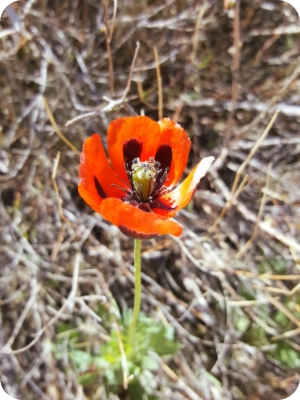
One of the most important forces in this early recovery stage is the emergence of pioneer plant species—plants specially adapted to disturbed, nutrient‑poor environments. These early colonizers stabilize the soil, reduce erosion, and create the first layer of organic matter that future plant communities depend on. Many of these species are known as fire followers, and some even require heat or smoke to germinate. You can explore examples of these remarkable plants in our related article, Wildfire Flowers: Resilient Blooms Rising from the Ashes, which explains how species like fireweed, fire poppy, and Baker’s globe mallow help ecosystems rebound after burns.
As vegetation spreads, fallen leaves, roots, and decomposing plant material gradually rebuild soil structure and fertility. Over time, these processes support the return of more complex plant and animal communities, allowing the ecosystem to transition from a burned landscape back into a thriving, interconnected habitat.
Human Restoration Efforts
In areas where natural recovery is slow or uncertain, human intervention can accelerate restoration. Reforestation projects help reestablish vegetation cover, reducing erosion and improving habitat quality.
Engineers and land managers often use erosion-control measures such as barriers, mulch, and specialized ground coverings to protect vulnerable soils. These techniques help prevent valuable topsoil from being washed away during storms.
Researchers are also exploring innovative approaches to soil rehabilitation. Some projects involve adding biochar, a charcoal-like material that can improve soil structure and water retention. Others focus on restoring microbial communities through carefully designed ecological management practices.
What Researchers Are Learning Today
Wildfire science continues to evolve as researchers develop new tools and technologies. Satellites provide detailed information about burn severity across vast landscapes, while laboratory analyses reveal subtle chemical changes occurring beneath the surface.
Scientists are increasingly interested in understanding how climate change may influence future wildfire behavior and soil recovery patterns. Rising temperatures and prolonged droughts could increase the frequency of severe fires, making soil resilience an even more important area of study.
These investigations are helping researchers identify strategies that support recovery while improving wildfire preparedness. The lessons learned today may prove essential for managing future landscapes in a changing climate.