Why Peat Fires Behave Differently
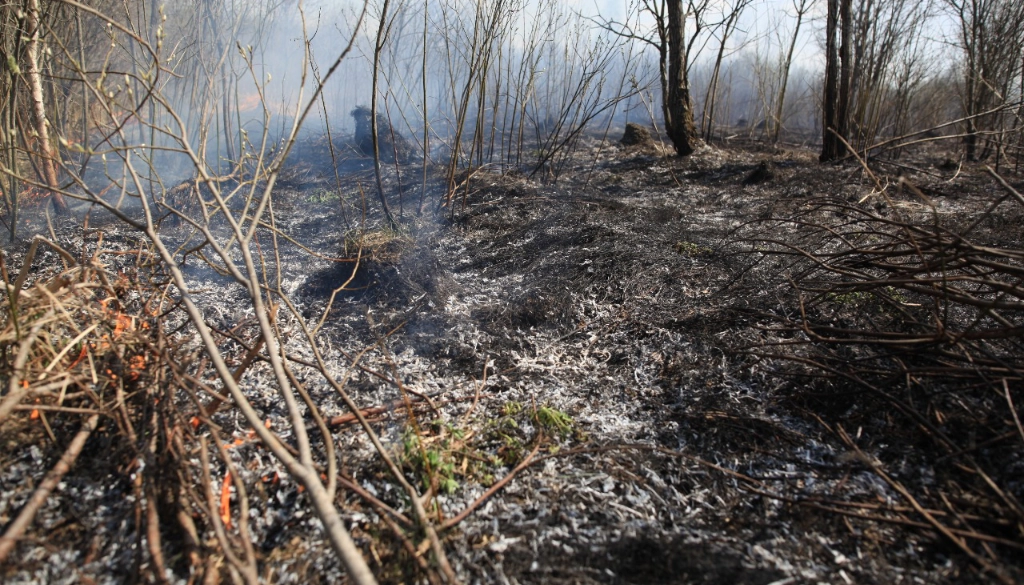
Peat is a dense, carbon-rich organic material formed over centuries in wet environments. When drainage, drought, or land-use change lowers water tables, peat becomes vulnerable to ignition. Once ignited, it can smolder underground with limited oxygen, spreading horizontally and vertically through the soil profile.
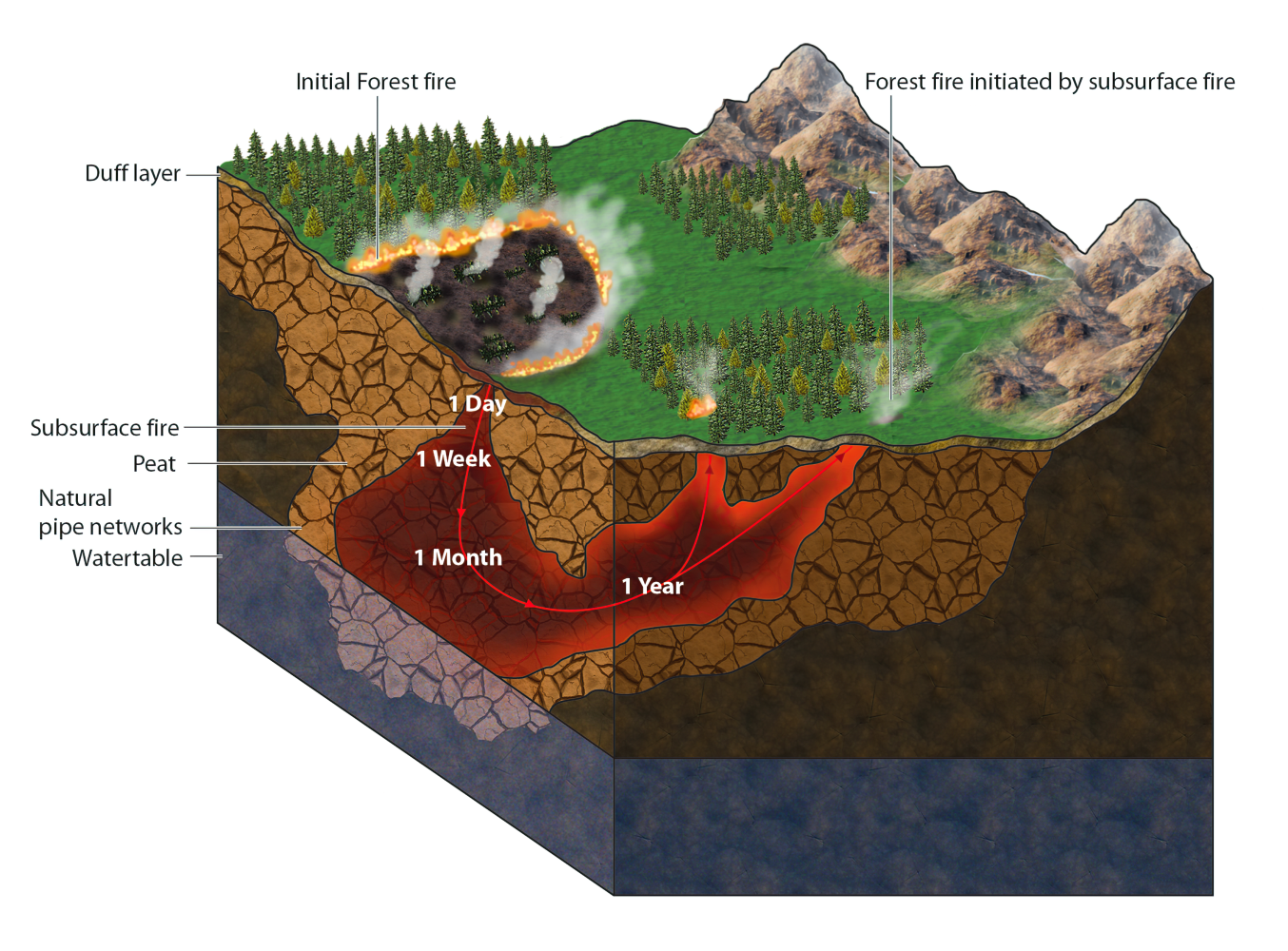
Operationally, this means:
- Hotspots are difficult to locate,
- Suppression is water-intensive and slow,
- Fires can persist for weeks or months,
- Re-ignition is common if verification is incomplete.
.
Hidden Hazards for Firefighters
Peat fires pose serious safety risks. Smoldering combustion creates underground voids that can collapse without warning, injuring firefighters or trapping vehicles. Smoke from peat contains fine particulates and toxic compounds, creating long-term public health impacts far beyond the fire perimeter.
In some regions, peatlands also accumulate heavy metals, toxins, or unexploded ordnance — meaning a single peat fire can trigger cascading environmental and safety consequences.
.
Why “Big” Tactics Often Fail

Highly visible suppression actions, such as aerial water drops, may look decisive but often do little to extinguish underground combustion. Peat fires demand precision, persistence, and verification, not spectacle. Resources spent on ineffective tactics can delay the actions that actually stop the fire.
.
The Core Operational Rule
Anton emphasizes a simple but unforgiving cycle:
- Detect early — before the fire grows large enough to be noticed by chance
- Confirm with infrared tools — surface observation is not enough
- Suppress directly while small — small peat fires are “cheap fires”
- Revisit and verify — missed hotspots are future incidents
This cycle saves resources, reduces emissions, and prevents long-term damage.
.
Prevention Through Hydrology
Long-term peat fire prevention is inseparable from water management. Restoring water tables, blocking drainage canals, and maintaining wet conditions reduce ignition probability and limit burn depth. Hydrology is not an environmental add-on — it is a core fire management tool in peat landscapes.
At SmokeD, we see ourselves as part of the same team as firefighters, land managers, and researchers — working together to protect forests and respond to wildfire risk before it becomes a disaster.