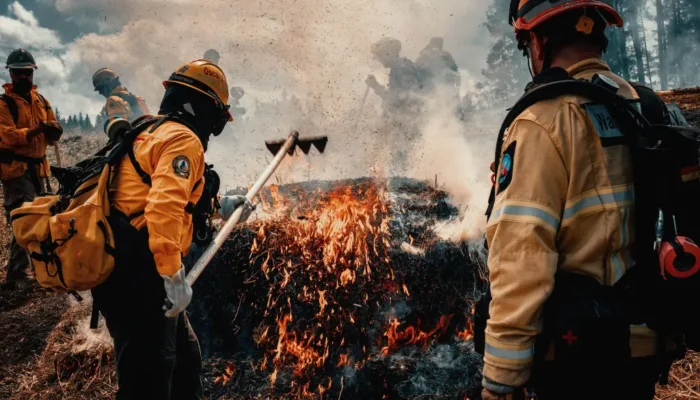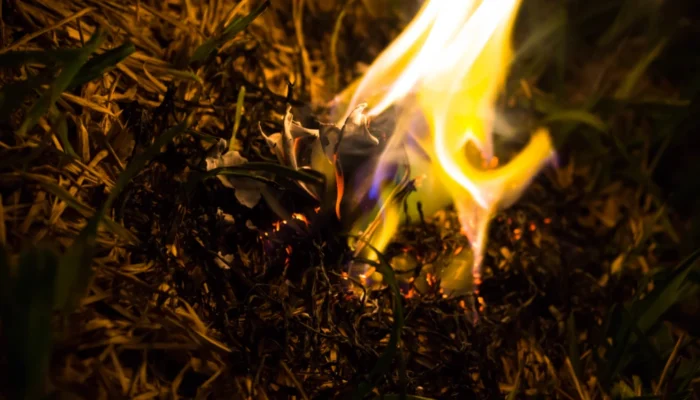
Wildfires are often imagined as walls of flame moving slowly across forests and hillsides, yet some of the most damaging fires behave in ways that seem almost impossible, with homes burning far ahead of the main fire line, long before the flames are anywhere nearby, and one of the key reasons this happens is a phenomenon known as Ember Storms, which involve countless tiny, burning fragments of wood being lifted into the air and carried across the landscape by wind and heat. Understanding how this process works is not just interesting from a science perspective, but deeply important for anyone who lives in fire-prone regions, because it shows that wildfire danger is not limited to what we can see, and that learning the physics behind fire spread can help communities better prepare, adapt, and reduce risk in the future.
.
Table of Contents
ToggleWhat Are Ember Storms?
When a wildfire burns through trees, shrubs, homes, and other structures, it does not consume everything at once, and instead it breaks fuel into smaller pieces, some of which remain hot and burning as they are torn away by strong winds and rising hot air. These burning fragments are called embers or firebrands, and when they are produced in large numbers and transported over long distances, they create what scientists describe as Ember Storms, a situation where the air itself becomes a delivery system for ignition sources.
Unlike the main flame front of a wildfire, which moves across the ground as vegetation ignites in sequence, embers can travel over rivers, roads, fire breaks, and even wide areas of cleared land, landing silently and unpredictably on rooftops, dry leaves, wooden decks, or inside attic vents. This is why firefighters often say that wildfires do not simply spread, but instead jump, because the next fire can begin miles away from the last one, sparked by something no larger than a glowing twig.
Communities affected by major wildfires frequently report that houses began burning seemingly at random, with no visible flames nearby, which can feel confusing and frightening without an understanding of ember-driven fire behavior.
Learning how these embers form and move through the air helps explain why traditional ideas about fire lines and distance from forests are sometimes not enough to guarantee safety.
.
The Physics Behind Flying Embers
To understand how embers can travel such long distances, it helps to look at the basic physics of heat, air movement, and combustion, all of which interact in powerful ways during a wildfire. When a fire burns intensely, it heats the surrounding air, and hot air is less dense than cool air, which causes it to rise rapidly, forming strong upward currents known as convection columns.
These rising columns of hot air act like giant elevators, lifting burning material high above the ground, sometimes thousands of feet into the atmosphere. Once embers reach these heights, they can be carried horizontally by strong winds that often accompany wildfires, especially during extreme weather conditions such as heat waves, droughts, and windstorms.
The size, shape, and material of an ember all affect how far it can travel, with lighter, flatter pieces often staying airborne longer than heavier chunks. Some types of wood, especially those that burn slowly and retain heat, can remain hot enough to ignite new fuel even after traveling for several minutes through the air.
At the same time, the turbulence created by wind moving over uneven terrain, buildings, and vegetation can keep embers swirling and suspended, rather than letting them fall straight to the ground. This complex interaction between rising heat, wind speed, and landscape features is why predicting exactly where embers will land is extremely difficult, even with modern fire modeling tools.
.
How Ember Storms Ignite Homes Miles Away
When embers finally land, the danger they pose depends less on their size and more on where they come to rest, because even a small, glowing ember can start a fire if it finds the right conditions. Homes and buildings often contain many hidden vulnerabilities, such as roof valleys, clogged gutters, wooden fences, and attic vents, where embers can settle unnoticed and begin smoldering.
In many wildfire investigations, researchers have found that homes did not ignite from direct flame contact, but from embers that entered these weak points and slowly heated materials until they burst into flame. This process can take minutes or even hours, which means a house might appear safe at first, only to catch fire long after the main fire has passed.
One of the most dangerous aspects of Ember Storms is that they can create dozens or even hundreds of spot fires at the same time, overwhelming firefighting resources and making it nearly impossible to stop every ignition. As these spot fires grow, they can merge into larger fires, accelerating the overall spread and increasing the intensity of the disaster.
This explains why some neighborhoods experience near-total destruction while others nearby remain mostly untouched, because the pattern of ember landings is shaped by wind direction, building design, and chance, rather than a steady line of advancing flames. Understanding this process highlights the importance of designing homes and communities with ember resistance in mind.
Environmental and Climate Factors That Intensify Ember Storms
The behavior of embers does not occur in isolation, but is strongly influenced by environmental conditions that determine how easily fires start, spread, and generate airborne material. Dry vegetation, low humidity, and prolonged drought all make it easier for embers to ignite new fires, because fuels require less heat to begin burning.
Certain types of vegetation, such as dense forests or areas with large amounts of dead and dry plant material, produce more embers when they burn, increasing the likelihood of long-distance ignition. Steep terrain can also intensify fire behavior by preheating fuels uphill and enhancing air movement, which supports stronger convection columns.
Climate change is playing a growing role in shaping these conditions, as rising temperatures and shifting weather patterns lead to longer fire seasons and more frequent extreme fire weather events. Stronger winds, hotter days, and drier landscapes combine to create fires that burn hotter and produce more embers than many historical fires.
As a result, modern wildfires are increasingly capable of generating ember activity on a scale that challenges existing firefighting strategies and community planning assumptions. Recognizing how environmental factors influence ember behavior is essential for adapting to a future where wildfire risk is likely to continue increasing.
.
Why Learning About Ember Storms Matters
Education is one of the most powerful tools for reducing wildfire risk, because understanding how fires behave allows individuals and communities to make informed choices about prevention and preparedness. When people learn that homes can ignite from embers rather than direct flames, they begin to see why measures such as clearing debris, using fire-resistant materials, and maintaining defensible space are so important.
This knowledge also supports better building codes and land-use planning, encouraging designs that reduce the chances of ember entry and ignition.
Communities that invest in wildfire education and science-based mitigation strategies are often better equipped to respond effectively when fires occur.
By learning about wildfire physics, people can move beyond fear and confusion toward a clearer understanding of risk, which empowers them to take practical steps to protect themselves and others. Curiosity about how fire works can lead to stronger public support for research, emergency preparedness, and environmental stewardship.
.
Turning Knowledge Into Preparedness
Wildfires are complex natural phenomena driven by physics, weather, and human influence, and embers play a far greater role in destruction than many people realize. By exploring how heat, wind, and burning materials interact, we can better understand why fires spread so quickly and unpredictably across modern landscapes.
Learning about the science behind ember-driven ignition helps explain past disasters and provides valuable insights for reducing future losses. As wildfire risks continue to grow, turning scientific understanding into practical action will be essential for building safer, more resilient communities.